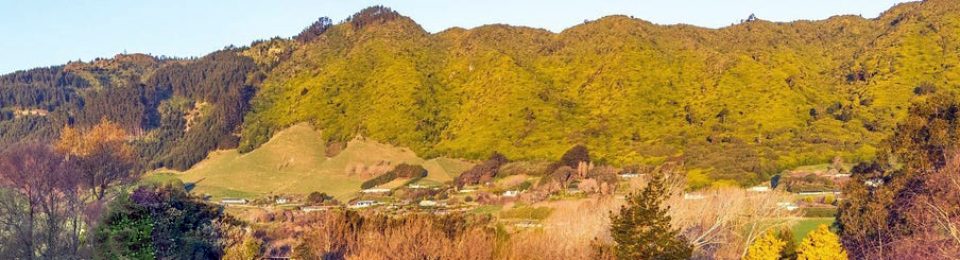
We took the 290 bus from Waikanae station to Otaki beach, or at least one street before it, and being an ideal day for the event — clear blue sky and a moderate breeze — it was well attended by both the public and dozens of food and beverage vans/trailers, in fact some of them must have come from outside Kapiti. There a few other features like a sound stage for performers and the usual fun for kids like a bouncy castle.
There were kites depicting all manner of creatures and geometric shapes, although my favourite was the Jaws shark — ideal for a beach! I didn’t attempt to estimate the number but all of them should be in these pics.
“It’s unusual to have such a negative response when American troops are still fighting”
President Donald Trump’s war with Iran is revealing a massive rift among the American electorate that has not been seen in any other recent major conflict.
The United States launched a new air campaign — known as Operation Epic Fury — against the Islamic regime in Iran on Feb. 28, killing Supreme Leader Ayatollah Ali Khamenei. Thirteen American servicemen have been killed since the operation began.
Recent polling shows weak support for the war among Americans. According to a Reuters/Ipsos pollreleased March 1, only 27% support strikes against Iran. Support among Republicans is at 55%, while it is 19% among independents and just 7% among Democrats — making it one of the most unpopular wars in decades.
“It’s unusual to have such a negative response when American troops are still fighting, and I think that has everything to do with the polarization we’re facing,” pollster Scott Rasmussen, founder of Rasmussen Reports, told the Daily Caller News Foundation.
“Now, that the view about Iran is becoming more negative. Let’s be very clear about this. There is a lot of downside potential coming out of Iran that could really hurt the president, really hurt Republicans,” Rasmussen said.
The White House has defended the operation in Iran, arguing that Trump’s decision was necessary to stop Iran from obtaining a nuclear weapon.
“What matters most to the American people is having a Commander-in-Chief who takes decisive action to eliminate threats and keep them safe,” White House spokesman Davis Ingle told the DCNF, adding that the president does not make national security decisions “based on fluid opinion polls.”
‘All Over The Place’
The administration launched this war alongside Israel, puzzling many as the messaging and objectives have not been clear. After the quick success of Operation Absolute Resolve this past January, the administration seemed to think the Iranian operation would go the same way.
“The messaging is all over the place,” which makes it confusing, as “The President has not made his case” to the American people, Alex Vatanka, a senior fellow at The Middle East Institute, told the Daily Caller News Foundation. Vatanka further explained, “This is not one of the wars where it’s being fought 7,000 miles away, as gas prices were felt right away.”
In March 2003, 72% of Americans supported the war with Iraq, according to a Gallup poll released days after the conflict began. Just a month after the 9/11 terror attacks, Gallup found that 88% approved of military action inside Afghanistan. Operation Desert Storm also had significant approval in the month it began as a January 1991 Washington Post-ABC News poll showed roughly 80% backed the operation.
Napolitan News Service polling showed 55% of registered voters disapprove of Attacks on Iran. This marks a significant spike in disapproval from the previous 50% after an initial investigation found that the U.S. was responsible for the bombing of an Iranian school that resulted in the deaths of 165 civilians.
Recently I have had several readers asking about the problems that they are having with fruit they grow.
There are two aspects, one is diseases that affects the fruit and pests which include birds and wasps that like the sweet sugars of ripening fruit.
Wasps attacking fruit; the best solution is to make up the bait I wrote about a few weeks ago using the likes of a drink can, boric acid and orange juice. You make up the attractant/bait with one litre of orange juice and you put into that 2 tablespoons of Granny Mins Ant Bait or Boric Acid, stir to dissolve the powder; then take an empty coke or other similar empty can and pour a little of the solution into the can to about one third full.
So we have the can with about 50mm of orange juice with Granny Mins Ant Bait mixture at the bottom of the can; then put a straw or stick into the can through the open tab down into the liquid.
Place the can outside where there is known wasp activity and the wasps will smell the orange juice and climb down the stick into the can to take up the sweet solution before flying back to the wasp nest to feed it to the hive.
I am told that honey bees and Bumble bees are not attracted to the solution so they are safe.
Birds are a problem and unless you have a large tree of fruit and a small bird population locally then they can take most of your crop.
Bird netting I have found to be difficult to use unless on a frame out from the tree and secured completely so no birds can enter with a door for you to enter: a lot of work and not practical for many.
The Bird Gel deterrent we used last year helped but it worked best on larger birds rather than sparrows and smaller birds.
This year a gardener put me onto gauze bags that you put over the fruit and with the draw string supplied to secure it to the branch. I was able to obtain bags cheaply of various sizes on line.
Put into a search engine ‘bags to protect fruit from birds’ and you will find lots and Temu has them on sale at the moment I see; a very nice price for like 100 bags. They keep birds and wasps both off fruit but as I have found they are easier to put over a fruit or a bunch of grapes when the fruit is set and still small. You have to allow then for a good size bag that will accommodate the mature fruit. If too small the fruit can’t expand and very difficult to get out of the bag without cutting the bag. Otherwise they are great value. Clean and store for each season’s new fruit.
Other pests that attack fruit such as the codlin and guava moth can also be prevented with the bagged fruit.
If you would like my suggested alternative controls and preventions in regards to these two moths and their caterpillars that do the damage send me an e-mail to wallyjr@gardenews.co.nz asking for Moth Control.
Recently I have had a few gardeners from northern parts find guava moth grubs in their tomato fruit.
Brown rot (primarily Monilinia species) is a highly destructive fungal disease that attacks a wide range of fruit, most notably stone fruits like peaches, nectarines, plums, cherries, apricots, and almonds.
It also affects pome fruits including apples, pears, and quinces along with berries and citrus in certain conditions.
Once a tree has caught the disease it is very difficult to eradicate as the spores will be on the tree and on the soil to cause another loss of fruit the following season.
What you can do now is a spray of Wallys Copper Nutrient to get some copper into the tree before it rests for winter. Last season a few gardeners using the Copper Nutrient reported less problems with brown rot on fruit later.
Cleaning up debris from under the tree and nearby and removing any mummified fruit carefully is the next thing to do after harvest has finished.
Then mix potassium permanganate at three quarters of a tea spoon with a table spoon of Ocean Solids in one litre of warm to hot water to dissolve. Then add to another two litres of water and spray that over the tree and soil under the tree after harvest has finished.
You can repeat again in mid winter as an extra precaution.
The above is designed to kill the disease spores which will cause problems next fruiting season.
When the tree begins to move in the spring apply another spray of Copper Nutrient. Also sprinkle Ocean Solids under the tree from trunk to drip line; then Fruit and Flower power at the drip line.
Repeat the Fruit and Flower power monthly and a back up spray of Copper Nutrient at that time.
Doing the above you may have done sufficient to have saved a reasonable amount of the fruit from damage.
In the past I have suggested once the fruit have formed and got to a halfway size towards maturity then make up a Spray of Liquid Copper, Sulpur wetable powder, potassium permanganate and Raingard which you spray over the fruit (not the tree) every two weeks till harvest.
Using this alone with the potassium permanganate sprays at end of season has proved to reduce the incidence of the disease giving the gardeners a reasonable crop to eat.
As time goes on I am more convinced that growing any fruit trees from a stone or pip will give you a wonderfully healthy tree for free and first small crop within a couple of seasons or so.
So how do we get fruit trees free?
When you buy a fruit that you enjoyed then you stratify..
For stratification, stone fruit kernels benefit from cold stratification.
After cleaning, the pits should be soaked in water with MBL added for several hours to imbibe moisture, then optionally cracked slightly to help germination, as the hard outer shell can inhibit sprouting.
Place the moist seeds in a sealed container filled with damp peat moss, sand, or a wet paper towel, and store in a refrigerator for –12 weeks, or as recommended for each species.
If mould is a concern, adding a touch of cinnamon as a natural anti-fungal agent can help.
After stratification, seed can be planted outdoors where they are going to germinate and grow to maturity. Put a stake as a marker next to where you plant so when your tree sprouts you will know it.
The root cause of New Zealand’s vulnerability is the decommissioning of the Marsden Point Oil Refinery, the country’s only domestic refinery. Had Marsden Point remained operational, New Zealand could have refined crude domestically, including alternative sources outside the Gulf, maintaining supply even in the face of global disruptions. Domestic refining would have also allowed NZ to blend and store strategic reserves, providing a buffer against international shipping delays and mitigating price spikes. –Peter MacDonald
Between 1962 and 1964 the Marsden Point Oil Refinery was constructed by Bechtel under the direction of the New Zealand Government. The new plant was to supply petrol, diesel, aviation fuel and other products to the country, making it a crucial part of the country’s infrastructure. As Peter MacDonald notes, if we still had it today we would in a much better position to weather the storms of the current oil crisis caused by the March 2026 American and Israeli war against Iran.
Ardern’s personal agenda
Back in 2022 Prime Minister Ardern oversaw the refinery’s closure driven by her obsession with eliminating fossil fuels. On a personal level her decision was selfish and arrogant, and on a national level thoughtless and economically damaging.
Her ideologically driven beliefs about so called ‘climate change’ and global warming now sees the country in big trouble and dependent on refineries in South Korea and Singapore to supply our fuel. However realistically New Zealand is well back in the queue for supplies behind big markets in the region like India, Japan, Australia, and South Korea.
Reality on fossil fuels
About 80% of the world’s energy comes from fossil fuels. Whether we like it or not that is the reality. We need them. New Zealand is a tiny player in the world’s energy use and cannot reduce dependence on these fuels. We shouldn’t even try.
What the present coalition government needs to do is set in motion the recommissioning of the Marsden Point Refinery to lessen our vulnerability to oil shocks.
Pollution from fossil fuels maybe undesirable, but realistically we need the energy source to power our vehicles and economy.
Using the gas pipes
If the pipes are staying, let’s fill them with home-grown, nation-building solutions that cut emissions, create regional jobs and strengthen export competiveness starting with biomethane. Alzbeta Bouskova Houghton Convenor of Gaseous Biofuels, Bioenergy Association
These pipelines are here to stay and we need to use them with locally produced fuel. Like France and Denmark we should make the most of our local resources. We have the requirements, expertise and technology to use our gas pipes for the benefit of the country.
Political options
Labour leader Chris Hipkins last week spoke of the need for economic resilience given the current oil crisis, but it was the Ardern-Hipkins governments which closed Marsden Point, terminated local oil and gas exploration, closed the coal mines and made us dependent on importing oil and coal.
The present Coalition government wants us to become more self-reliant for fuel and has committed to building an LNG import terminal at Port Taranaki, and this is definitely the way to go to reduce our dependence on overseas fuel suppliers.
Ending the war in the Gulf
How is this for a solution?
The Americans and Israelis agree to stop bombing Iran
The Iranian promise to keep the Straits of Hormuz Open to all shipping.
Far too simple?
I’m sure that Trump’s advisors know that the United States cannot select the ruler of Iran and that if they put American boots on the ground in the country they will not be welcomed as ‘liberators’ and it will be Vietnam all over again